
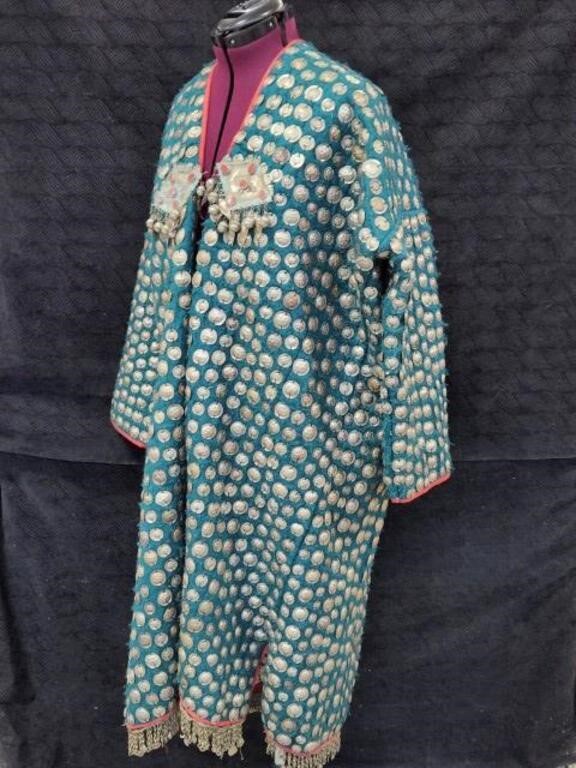
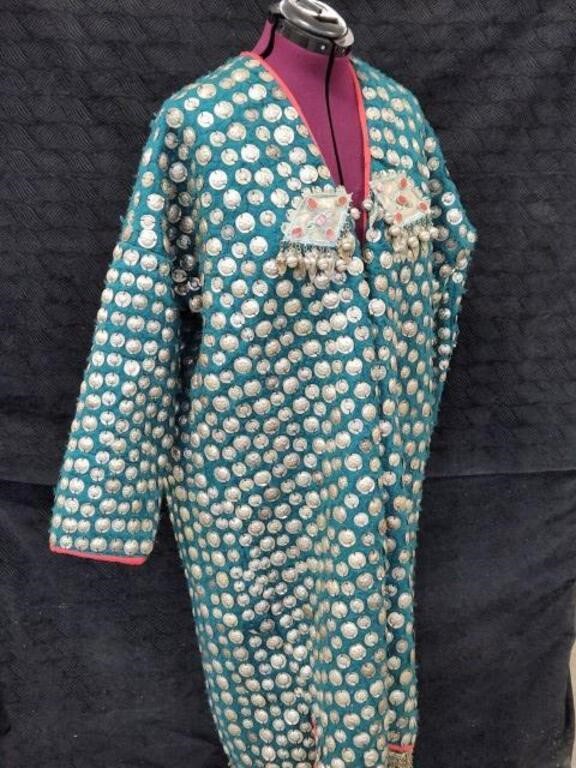
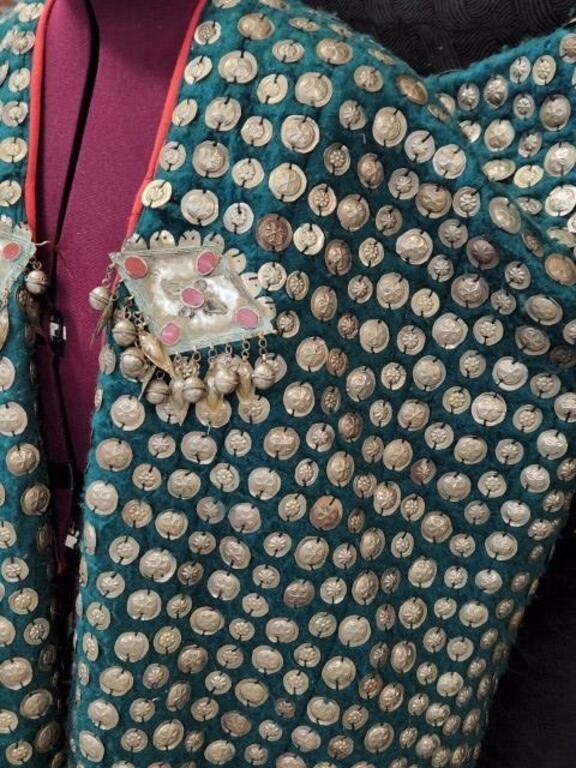
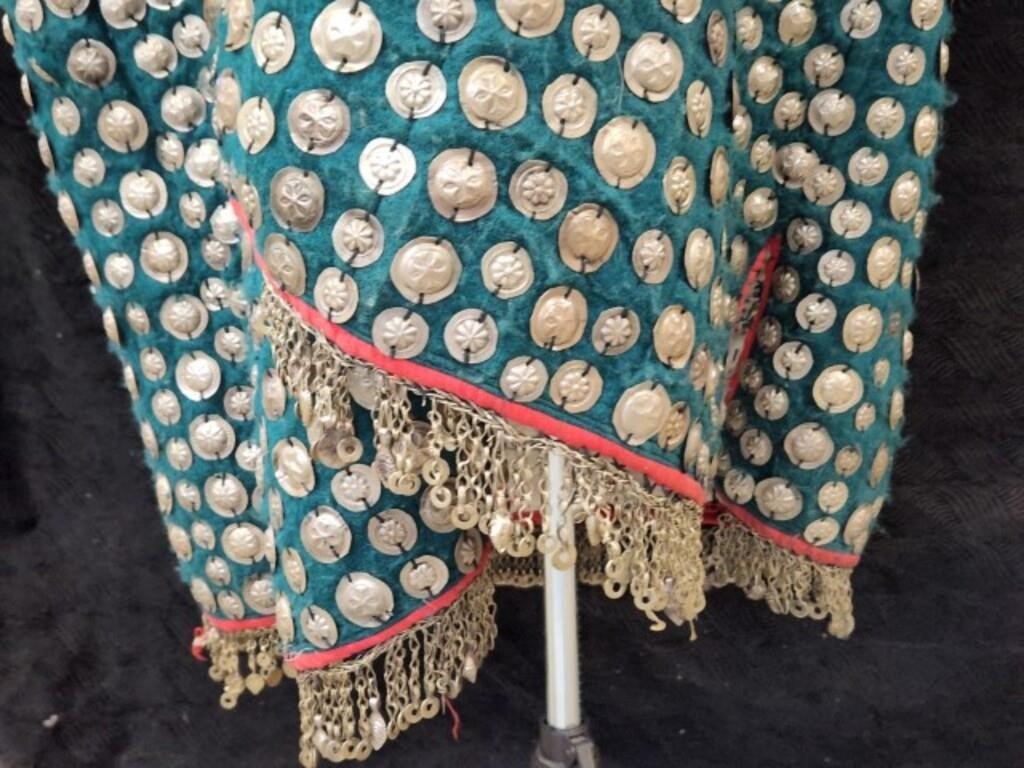
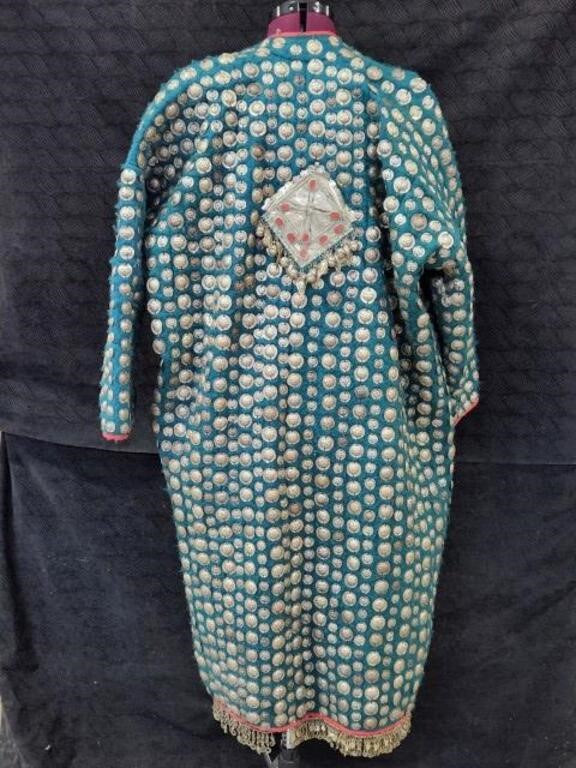

In the nomadic traditions of the Turkmen tribes (predominantly the Tekke and Yomut), a ceremonial robe like this was more than a garment—it was a wearable bank account and a powerful spiritual shield.
A Legacy of Portable Wealth
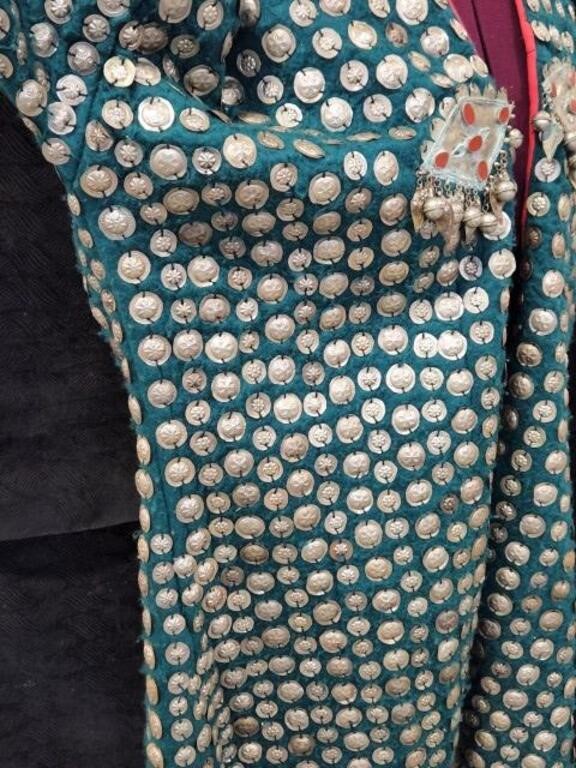
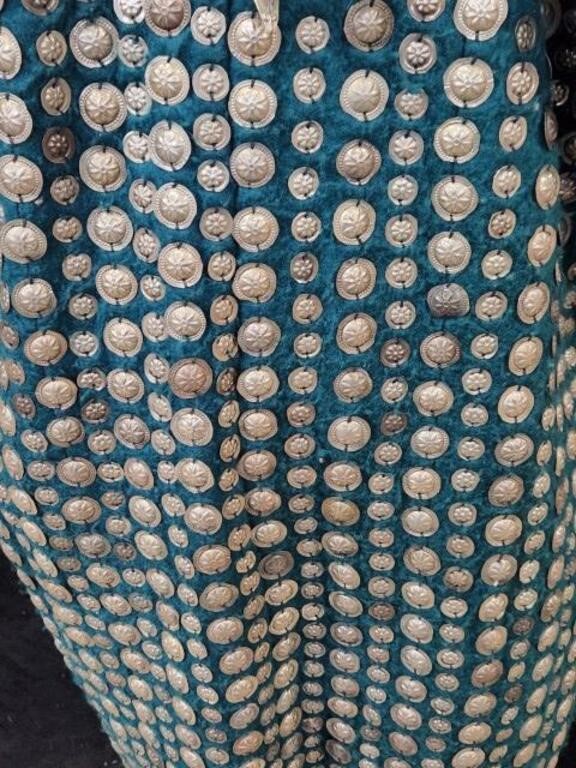
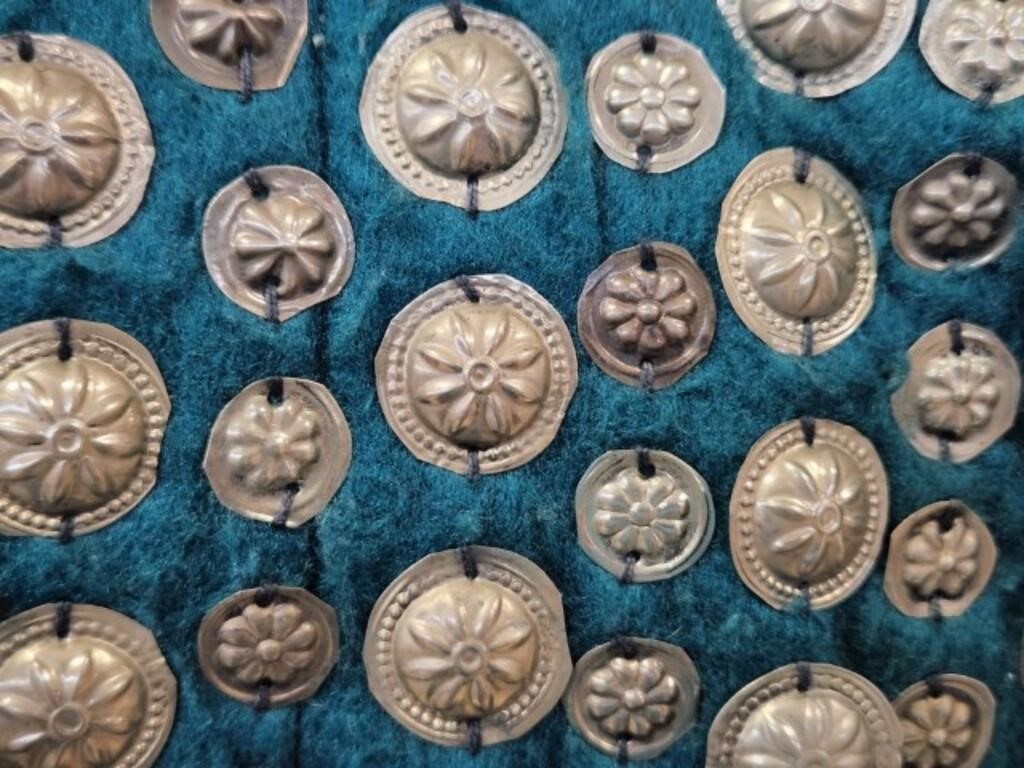
For the nomadic peoples of Central Asia, life was defined by movement. Families did not store their wealth in stationary banks; instead, they transformed silver coins and precious metals into intricate appliques sewn directly onto their clothing.
-
Financial Independence: Each coin and metal disc represented the personal dowry and accumulated wealth of the woman wearing it.
-
A Sound of Status: The characteristic “clinking” sound made as the wearer moved was a deliberate audible signal of status and prosperity within the tribe.
-
Generational Value: As daughters married, coins from a mother’s robe were often removed and resewn onto the daughter’s bridal attire, making these garments living records of family history.
Protection and the “Red Stone”
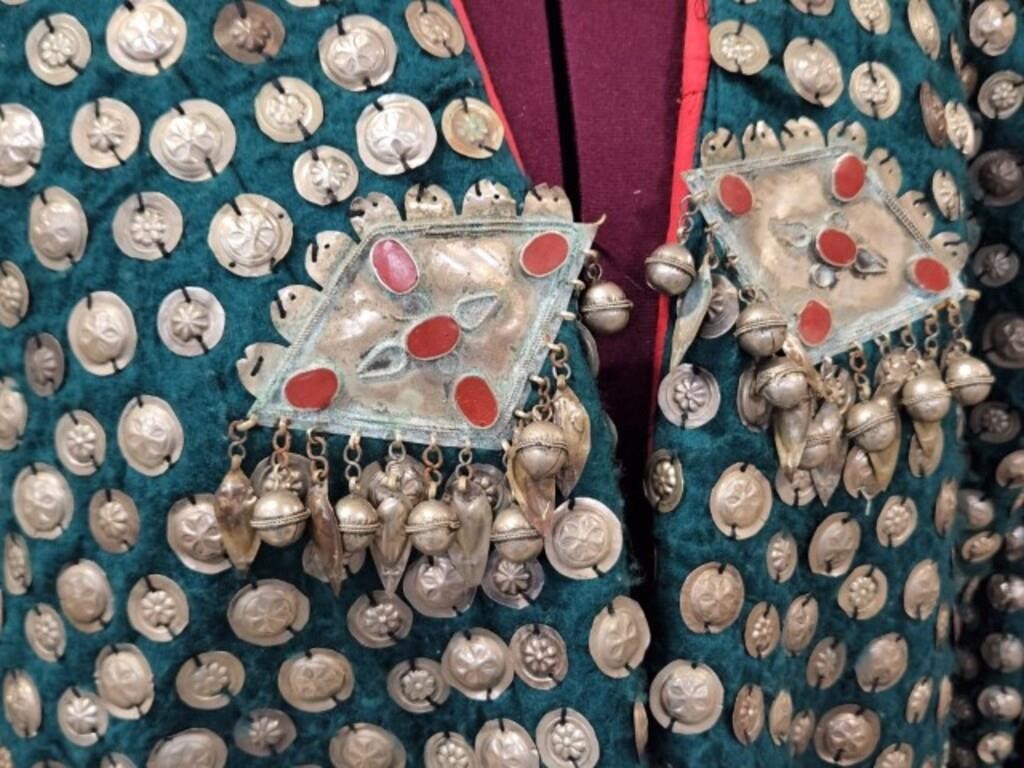
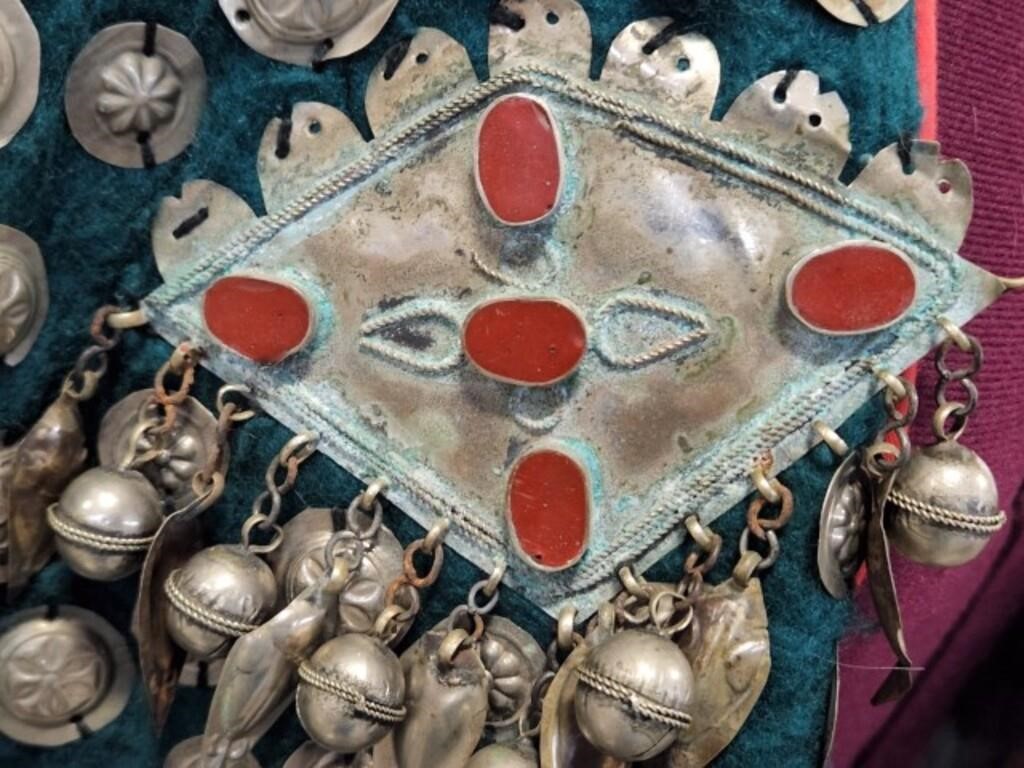
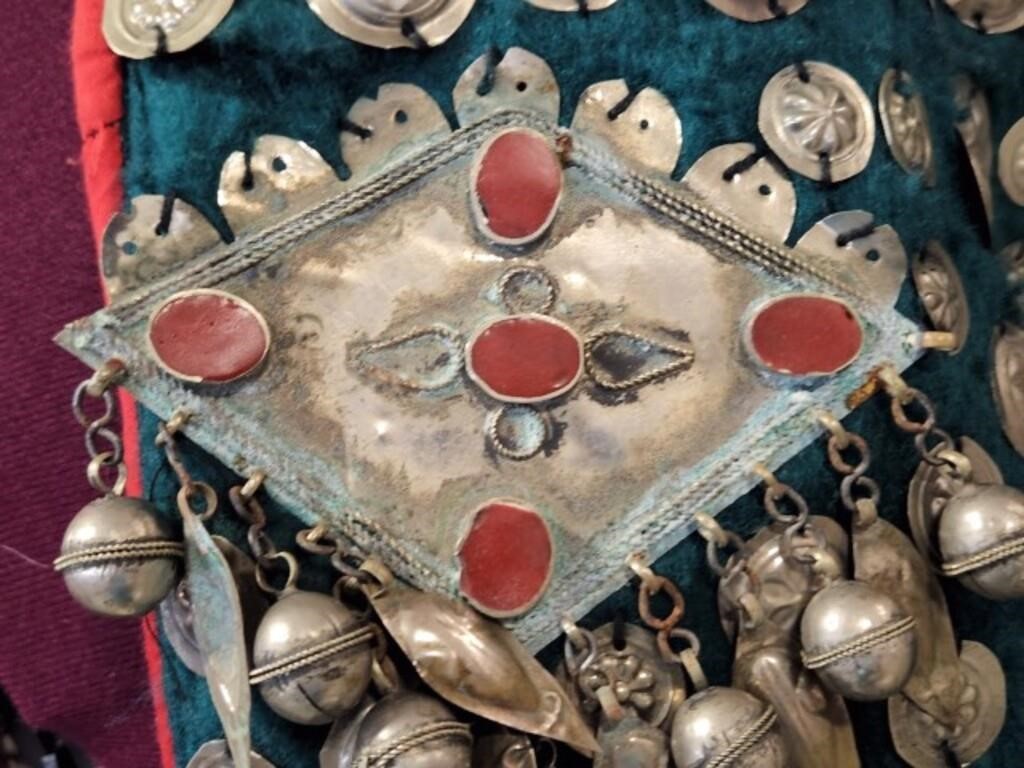
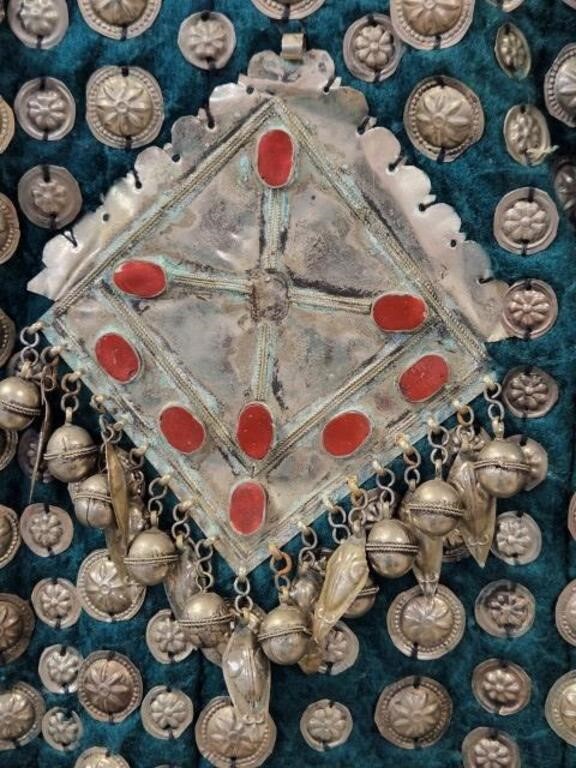
The large diamond-shaped medallions (known as gul) featured on this dress are set with carnelian-style stones, which hold deep spiritual significance in Turkmen culture.
-
The Spiritual Shield: Carnelian (known as hakyk) was believed by the Turkmen to protect the wearer from the “Evil Eye” and ward off illness.
-
Symbol of Health: The deep red hue of the stones symbolized blood, fire, and fertility, serving as a talisman for the continued health of the family line.
-
Sacred Geometry: The triangular and diamond patterns found in the metalwork were designed to trap negative energy, ensuring that only blessings reached the person within the robe.
Authentic Tribal Craftsmanship
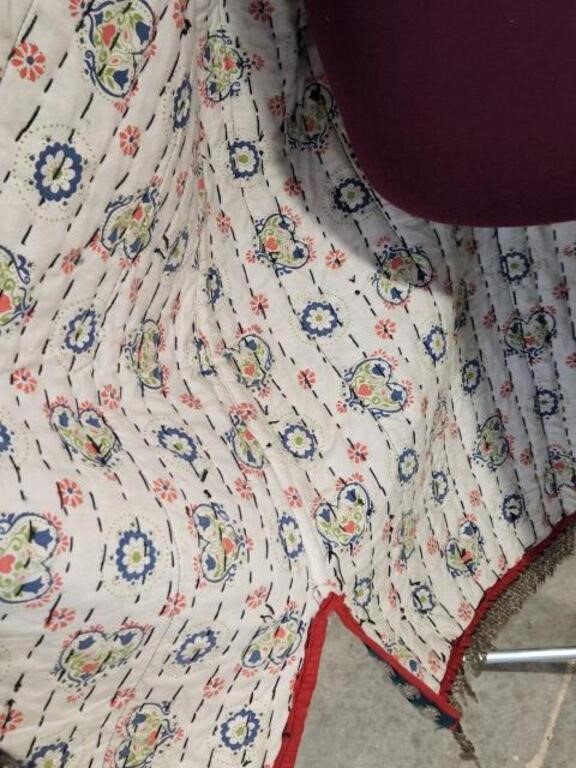
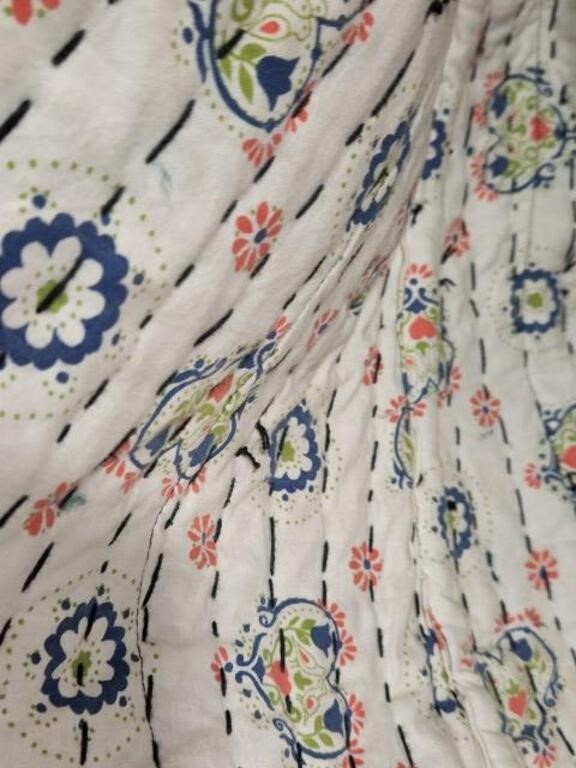
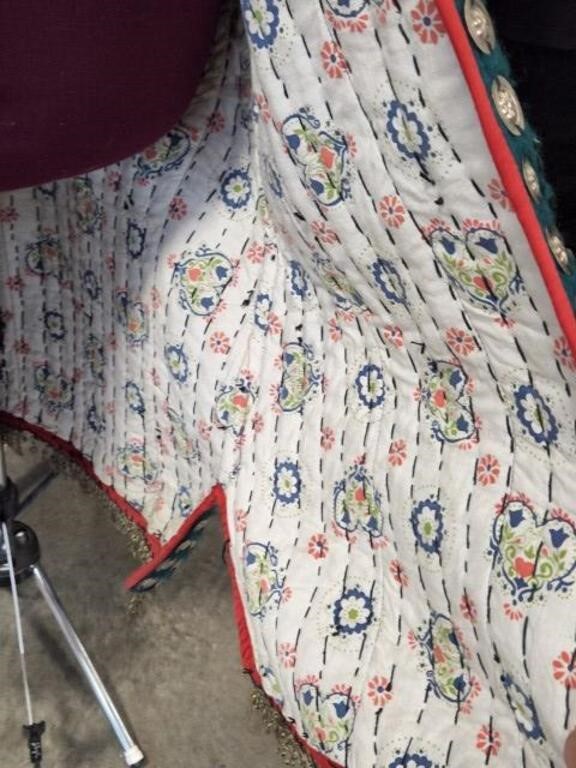
This piece features the dense, high-contrast teal and red palette favored for the most important tribal celebrations. The interior’s hand-quilted floral lining serves as a soft, hidden contrast to the heavy, protective “armor” of the exterior metalwork, representing the balance between a woman’s private domestic life and her public tribal identity.
-
Item Name: Vintage Turkmen Ceremonial Chapan (Coin Robe).
-
Cultural Origin: Turkmenistan; Central Asian Steppe (Likely Tekke or Yomut tribal group).
-
Circa: Mid-20th Century (1940s–1960s).
-
Materials: Silk/Wool blend exterior; Hand-quilted cotton lining; White-metal (silver-toned) tribal medallions; Glass and carnelian-style inlays.
-
Narrative Note: This garment represents the portable wealth of a nomadic household. The density of the metalwork indicates a high-status piece used for weddings and major tribal festivals.
1. Storage: Avoid Hanging
-
Never hang this dress on a standard hanger. The weight of the metal coins will eventually tear the shoulder seams of the vintage fabric.
-
Flat Storage: Store the robe flat in a large, acid-free archival box.
-
Padding: Use acid-free tissue paper to pad the sleeves and the body. Place tissue between the layers so the metal coins do not press directly into the fabric on the opposite side.
2. Cleaning: Pro-Only
-
Do not dry clean: Modern chemicals can strip the natural dyes or corrode the “white metal” alloy of the medallions.
-
Dusting: Use a soft-bristle brush (like a clean makeup brush) to gently remove dust from the coins and medallions.
-
Odor Removal: If the piece has a “vintage” scent, place it in a room with a dehumidifier or near a bowl of activated charcoal—never spray it with perfumes or fabric fresheners.
3. Metal Maintenance
-
Patina is Value: Do not use silver polish or “dip” cleaners on the coins. Collectors value the original dark patina, which proves the age of the piece.
-
Moisture Control: Keep the storage area at a stable humidity (around 45–50%). Excessive moisture will cause the metal to oxidize and create green “verdigris” spots that can permanently stain the teal fabric.

Reviews
There are no reviews yet.